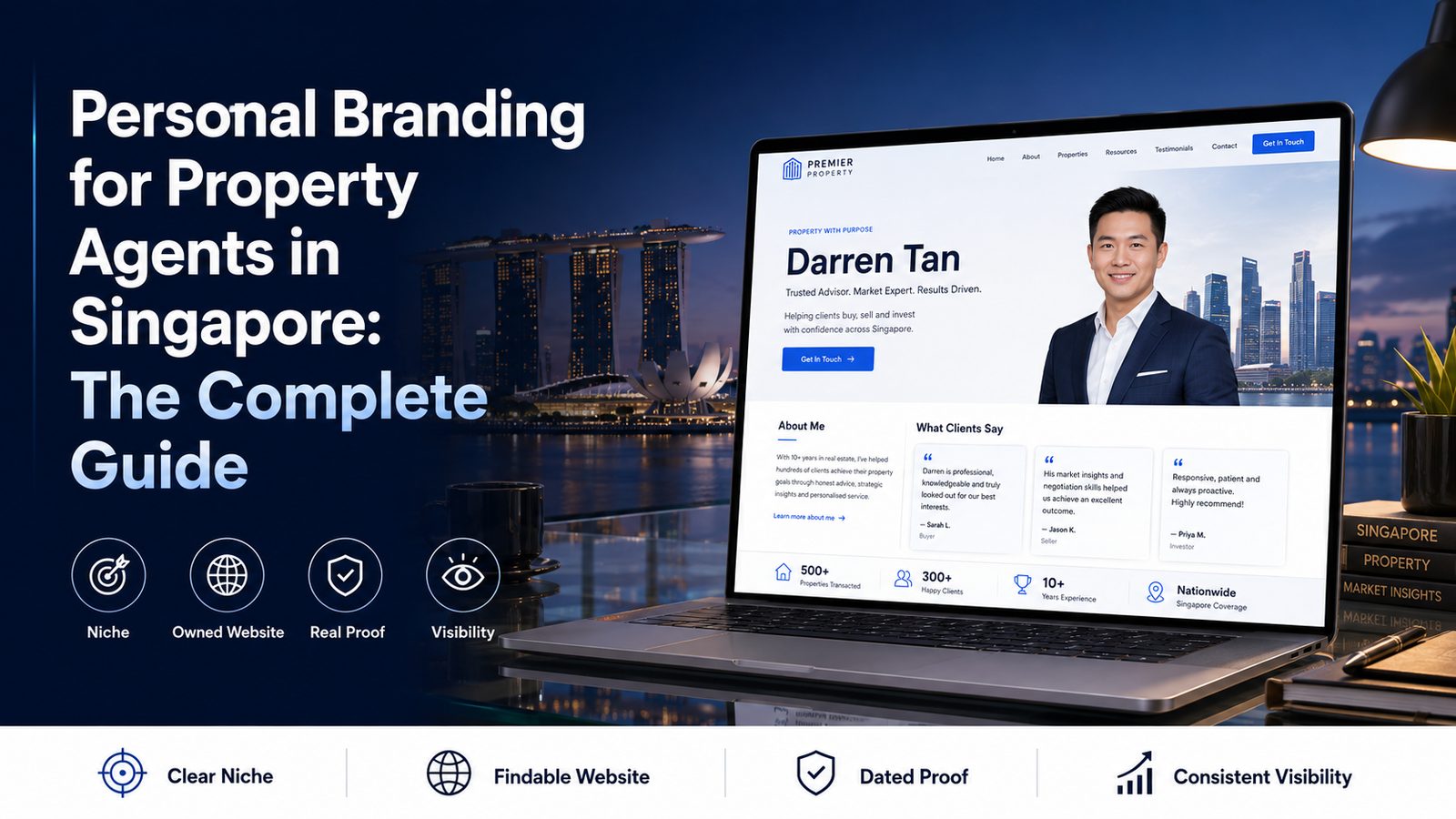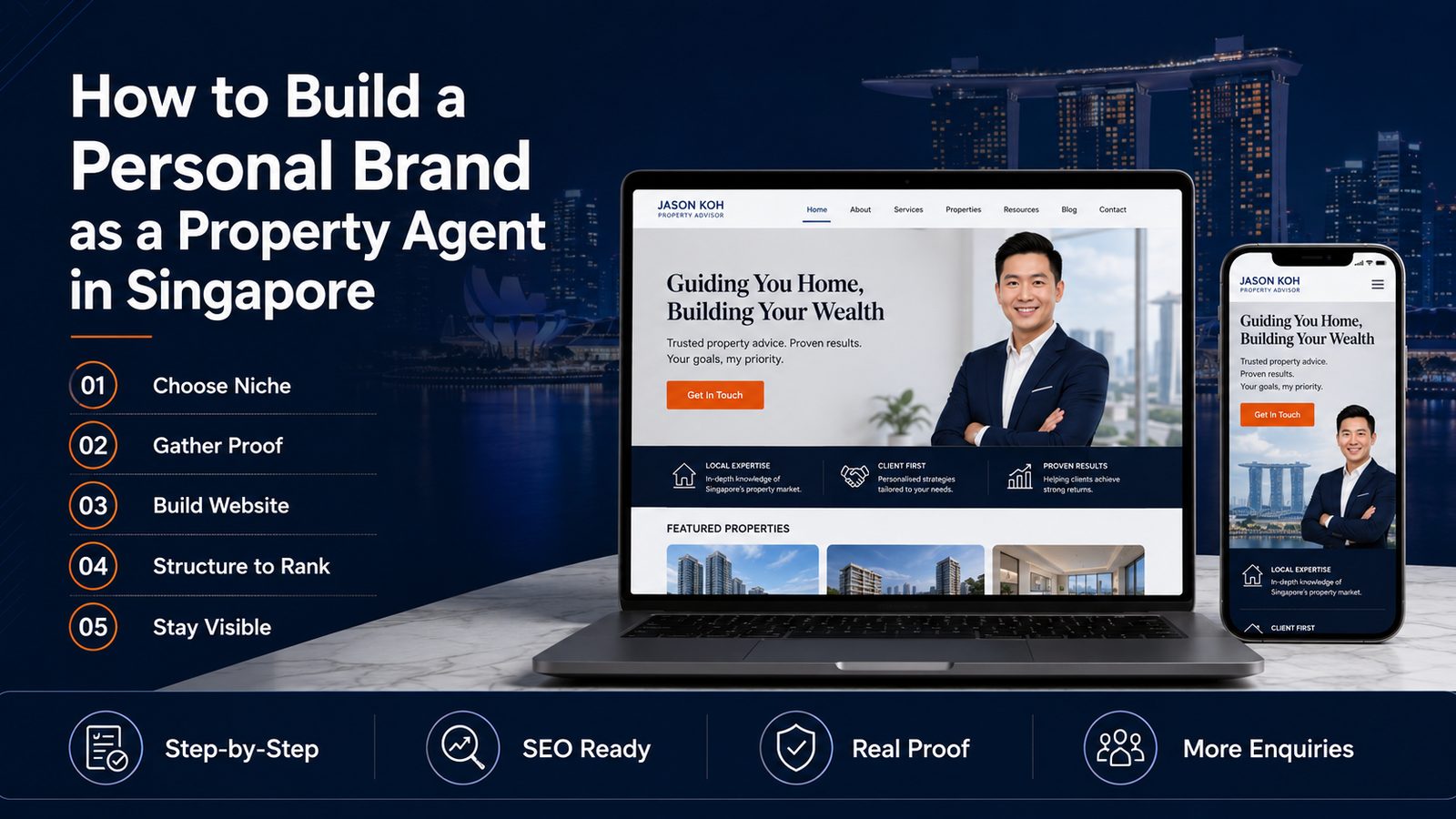
Building a personal brand as a property agent comes down to five practical steps: choose a specific niche, gather your real proof, build a website you own, structure it to rank on Google, and keep it visible with consistent activity. Skipping the order, especially jumping to social content before the niche and website are settled, is why most agent branding efforts stall.
01 Step 1: Choose a specific niche
Before any design or copywriting, decide who you specifically serve. This can be a district cluster (D9-D11 condos), a property type (landed, new launch, HDB upgraders), or a buyer segment (foreign investors, first-time BTO upgraders). A niche isn't a restriction, it's a filter that makes the right buyer recognise you as their person instead of one of thousands of general agents. If you skip this step, every following step, your website copy, your content, your ads, defaults back to generic.
02 Step 2: Gather your real proof
Before writing a single word of website copy, collect the facts: transaction count and rough date range, districts or projects you've closed, CEA registration number, and two or three genuine client testimonials with permission to use them. This step matters because it's the difference between a page that says "trusted, experienced agent" (a claim) and one that says "31 transactions across District 9-11 since 2023" (proof). Never invent numbers you can't back up, an unverifiable claim damages trust faster than having no claim at all.
03 Step 3: Build a website you own
A personal branding website is the anchor point everything else points to, your Instagram bio link, your WhatsApp signature, your name card QR code, your Google Ads if you run them. Unlike a portal profile, you control the layout, the proof shown first, and whether it's structured to rank for your name. This is the step most agents skip or half-do, because it feels like a "someday" project rather than the foundation it actually is.
What actually belongs on the page
Your niche stated clearly above the fold, a specific About section (not adjectives), dated proof, two or three testimonials, and one clear next step, usually a WhatsApp button. Nothing more is required to start.
04 Step 4: Structure it to rank
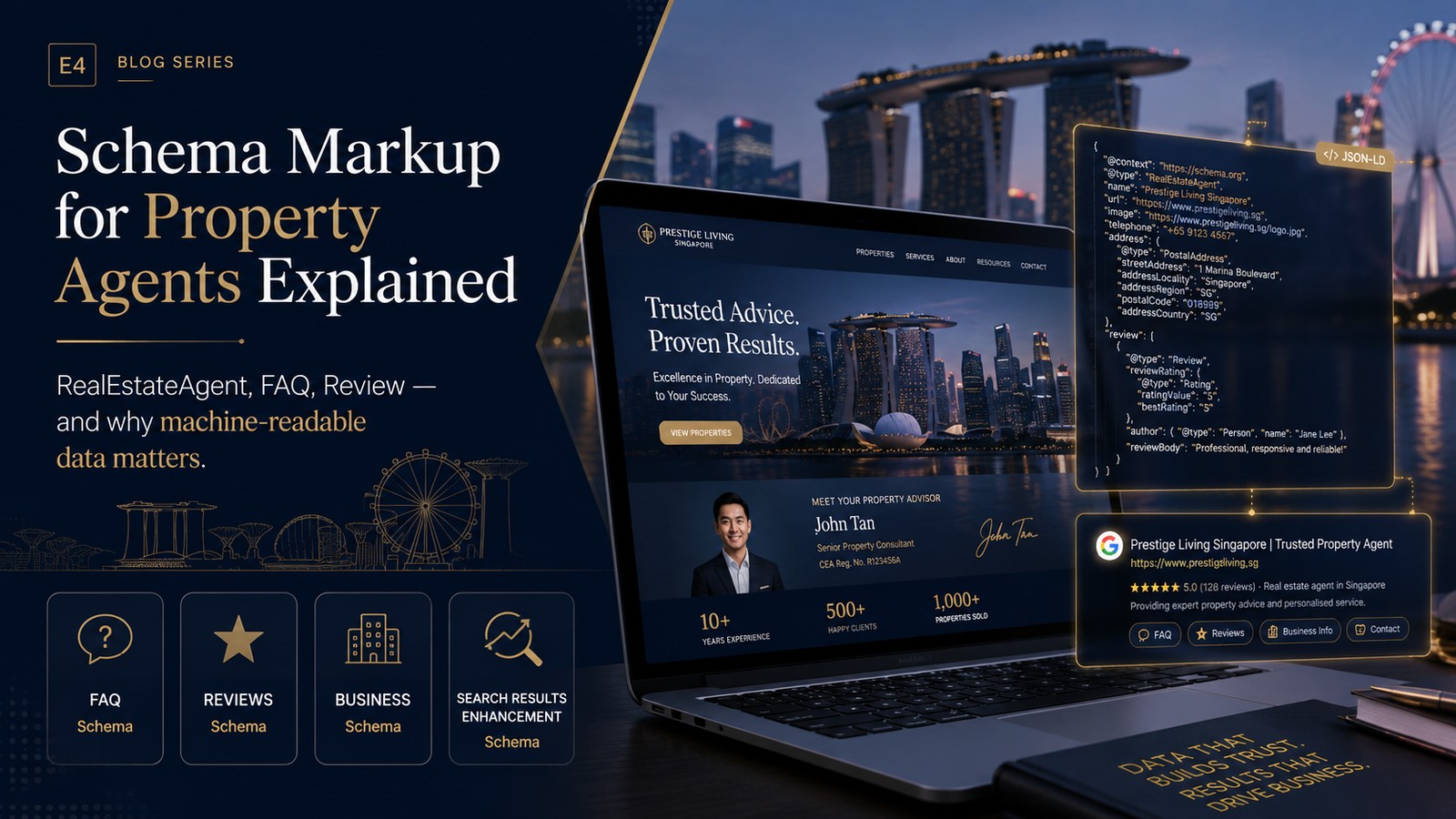
Your name should appear in the page title and headings, and the site should carry Person and RealEstateAgent schema markup so both Google and AI engines can read your facts as structured data, see our guide to schema markup for property agents. This is what lets you rank for your own name so a buyer who checks you out on Google finds the page you built, not a generic directory listing or nothing at all.
05 Step 5: Keep it visible
A finished website isn't the end, it's the base. Ongoing visibility, whether that's occasional content, active social profiles, or running Google Ads to your own landing pages instead of only relying on portal leads, is what keeps the brand compounding instead of going stale. The website is what earns trust once someone lands on it; visibility is what gets them there in the first place.
Free personal-brand audit
Not sure which step you're missing? Send us your current bio or profile and we'll tell you honestly where the gaps are.
Request a free audit →