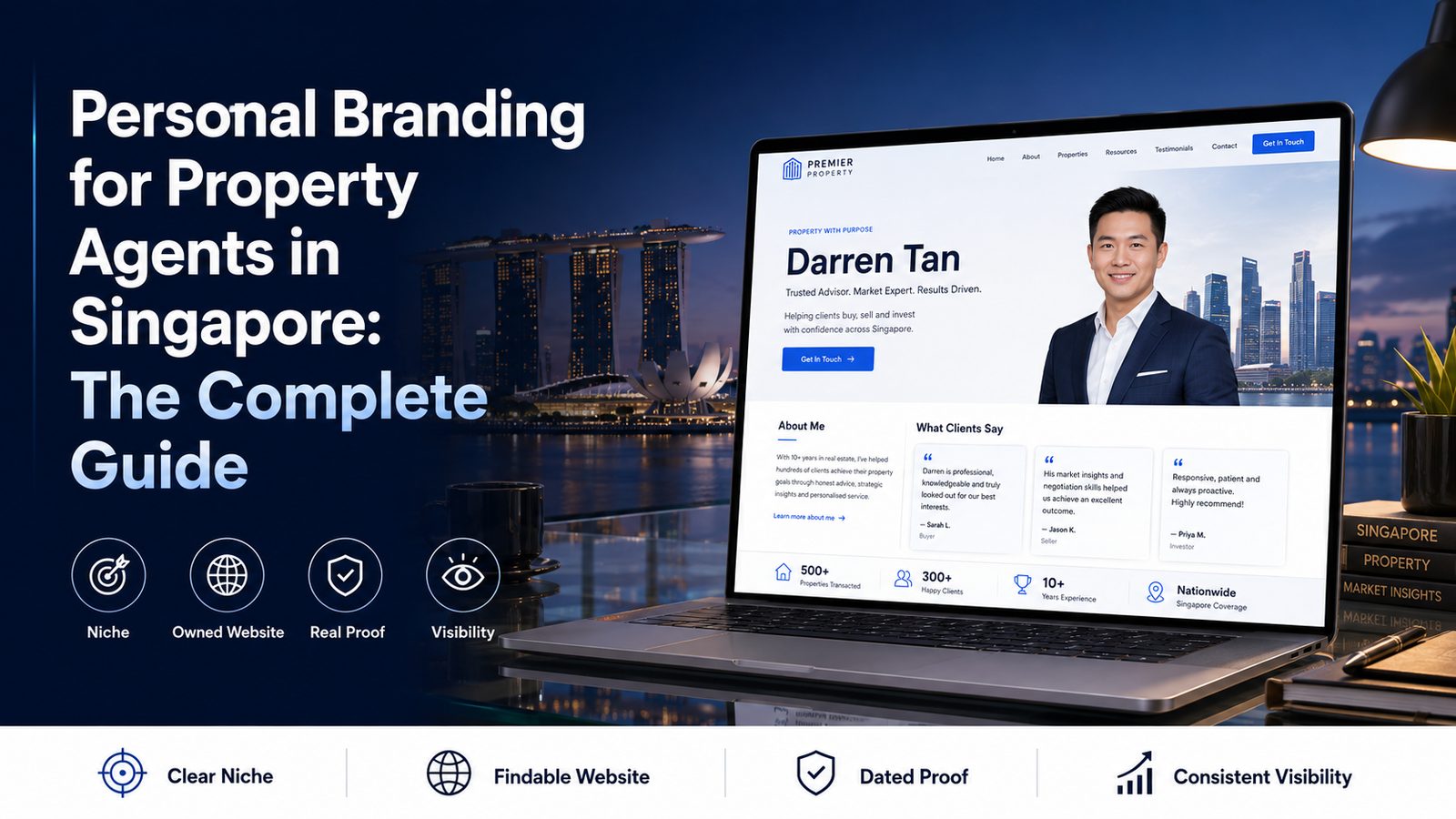
Personal branding for a property agent isn't a logo or a tagline, it's the combination of a findable name, a specific niche, visible proof of results, and a website or profile that a buyer can check before they call. In Singapore's crowded agent market, buyers now Google an agent's name before replying to a listing. This guide covers the four building blocks, in what order to build them, and how to avoid the two mistakes that make most agent branding forgettable.
01 Why personal branding matters more than ever
Singapore has more than 36,000 registered property agents competing for the same pool of buyers and sellers (CEA Public Register). When supply of agents is that high, the deciding factor usually isn't who has the best listing, it's who the buyer trusts enough to message first. A property purchase is one of the largest financial decisions most people make, so buyers now do what they do before any big decision, they search the agent's name, check what comes up, and form a trust judgment before the first WhatsApp message is even sent.
Personal branding is simply making sure what a buyer finds when they check you is specific, current, and convincing, rather than nothing at all, or a generic profile that looks identical to every other agent's.
02 The four building blocks of an agent's personal brand
A working personal brand for a property agent is made of four parts, and they work together, not as separate projects:
- A clear niche. The districts, property types, or buyer segment you focus on. "I help people buy and sell property" is true of every agent; "I help foreign buyers secure freehold condos in D9-D10" tells the right buyer you're their person.
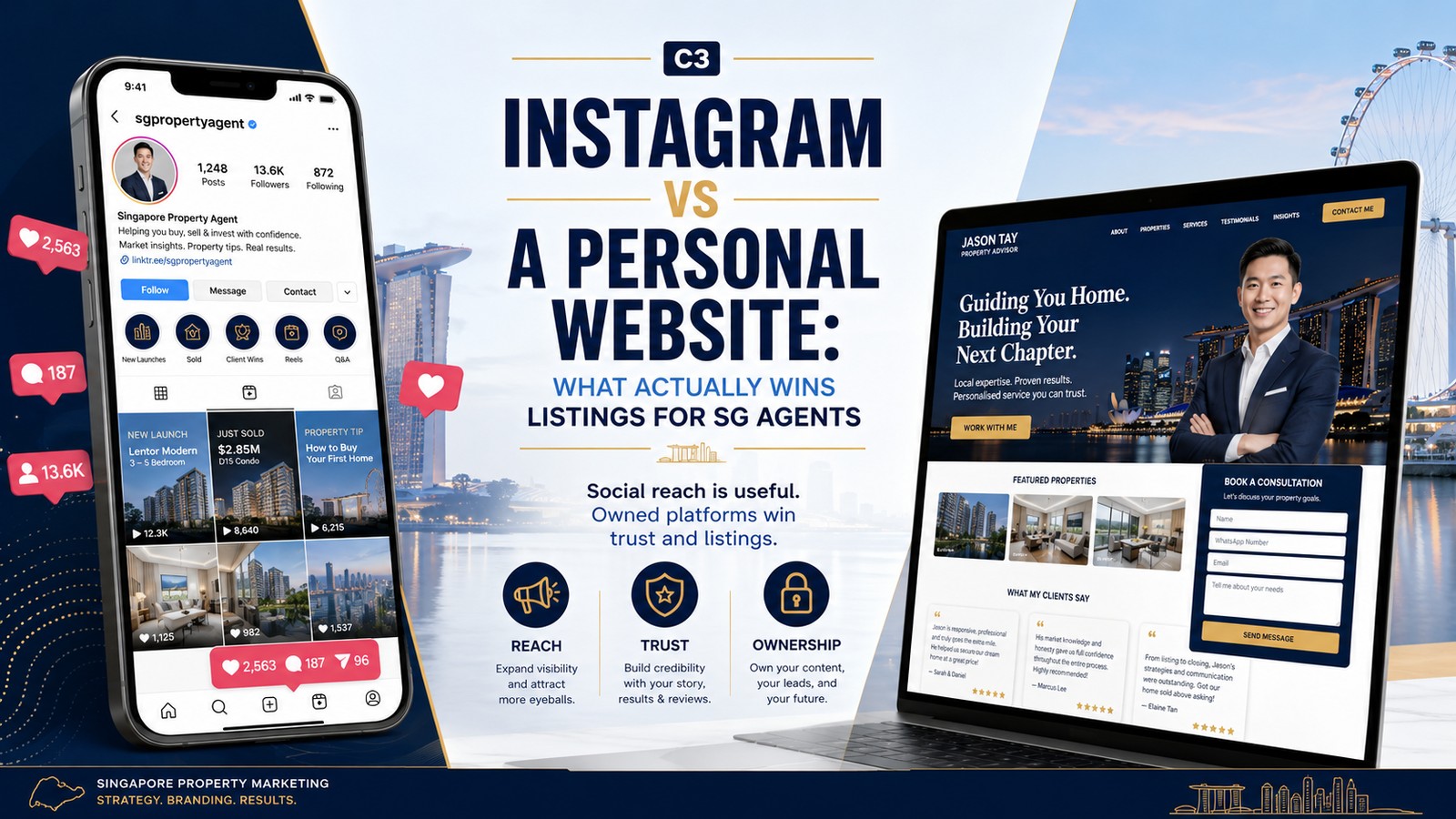
- A findable, owned page. A personal branding website that ranks when someone searches your name, rather than relying only on a portal profile you don't control and can't fully customise.
- Real proof. Dated transaction history, testimonials, and CEA registration details, shown as facts rather than adjectives.
- Consistent visibility. Showing up in the same niche and voice across your website, social profiles, and any content you publish, so the picture a buyer forms is consistent wherever they look.
The single biggest branding mistake
Trying to appeal to everyone. "I sell HDB, condos, landed, and commercial across all of Singapore" reads as generalist, and generalists are the easiest to forget. A specific, narrower positioning is what buyers actually remember and refer.
03 Where most agents get it wrong
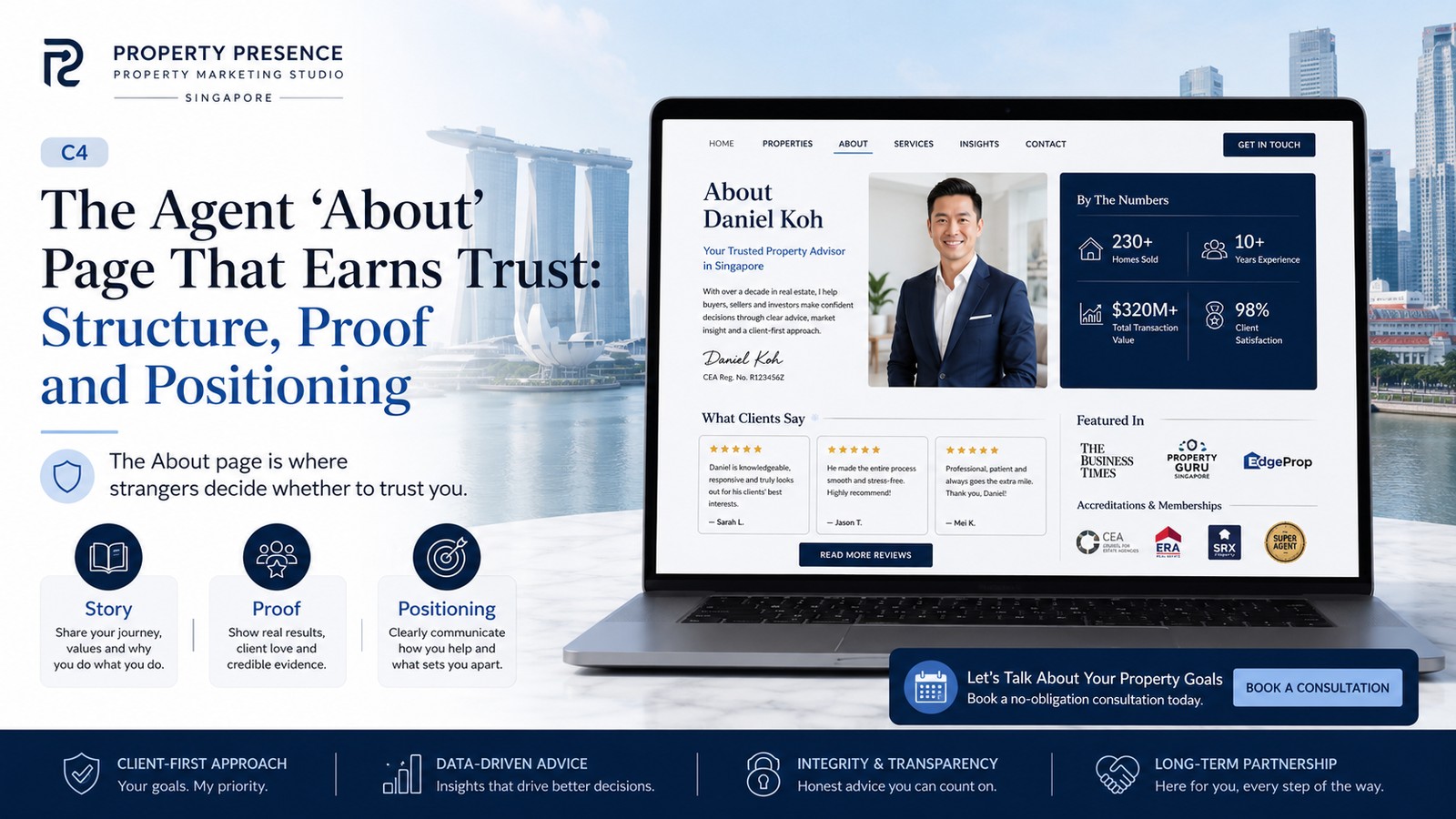
Two patterns show up repeatedly in agent branding that isn't working. First, relying entirely on a portal profile or Instagram account that the agent doesn't own, if the platform changes its algorithm or profile format, the agent's visibility changes with it, with no recourse. Second, filling a bio with adjectives instead of facts, "experienced," "dedicated," "results-driven" are claims every agent can make and buyers have learned to discount. A page that says "47 transactions in D9-D11 since 2022" does more trust-building work than a paragraph of adjectives, see our breakdown of what makes an About page actually earn trust.
04 Building your personal brand in the right order
Most agents try to do everything at once and finish nothing. The order that actually compounds is: niche first (decide who you specifically serve), then a website you own and can be found on, then proof (testimonials, transaction history, credentials), then ongoing visibility (content, social, referral flow). Trying to run ads or post content before the first two are settled usually wastes the spend, because there's nowhere credible for that traffic to land. This is also why we treat a personal branding website as the foundation of an agent's marketing system rather than an optional add-on.
05 Personal branding and GEO (showing up in AI answers)
The same structure that builds buyer trust, your name, niche, and proof presented clearly, is also what lets AI engines like ChatGPT and Perplexity accurately describe you when a buyer asks "who's a good property agent for District 9 condos." This is Generative Engine Optimisation (GEO), and it rewards exactly the same specific, fact-based branding that wins human trust. A vague bio confuses both a human reader and an AI model; a specific, well-structured one helps both.
Free personal-brand audit
Send us your current profile, bio, or website and we'll send back an honest audit: what's working, what's generic, and the specific changes that would make it convert.
Request a free audit →